
What Is Changing for Paramedical Admissions?
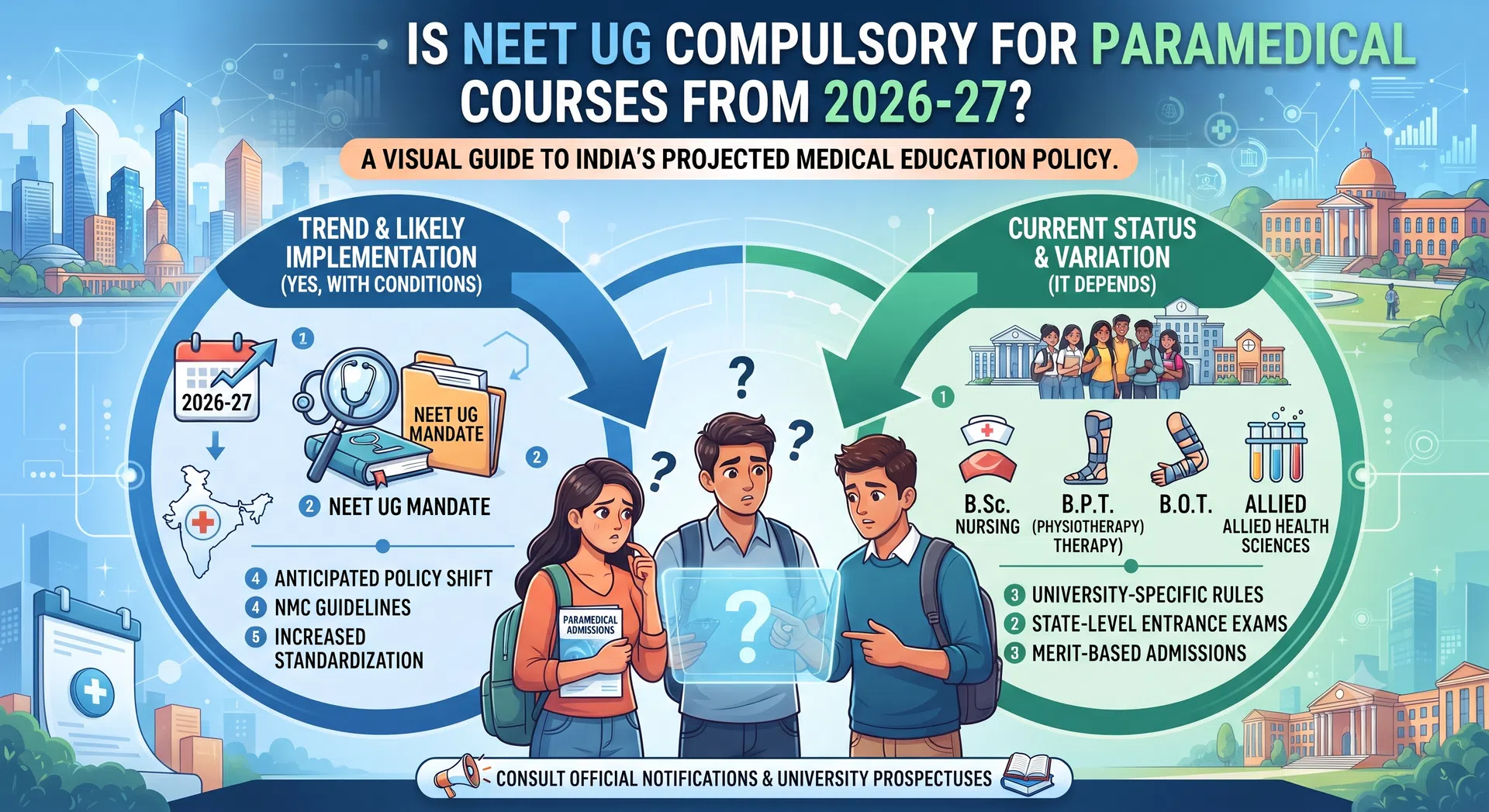
If you are a Class 12 student eyeing a career in physiotherapy, optometry, or any other allied health field, there is an important update you cannot afford to miss. The National Commission for Allied and Healthcare Professions (NCAHP) has notified that appearing for NEET UG will be compulsory for admission to several undergraduate Allied and Healthcare programmes starting the 2026-27 academic session.
Until now, many paramedical courses had their own separate admission processes, often based on Class 12 marks or institution-specific entrance tests. That is changing, and students currently in Class 11 or 12 need to start planning accordingly.
It's worth noting that most of the reporting on this change — including this article — is based on secondary coverage of NCAHP's notice (via outlets like Collegedunia and Shiksha) rather than the primary NCAHP circular itself. Students should verify final details directly on NCAHP's official website before making admission decisions.
Why Is NEET Becoming Mandatory for These Courses?
The NCAHP Act, 2021 gives the commission authority to define admission criteria for allied and healthcare programmes within their approved curricula. As part of this responsibility, NCAHP has built mandatory NEET UG appearance into the eligibility requirements for these courses, alongside existing academic conditions such as Class 12 marks.
In simple terms, NEET is no longer just the gateway to MBBS, BDS, or nursing. It is being extended to cover a much wider range of healthcare-related careers, bringing more standardisation and a common benchmark to admissions across allied health programmes in India.
Reported figures on the number of curricula involved vary depending on when the source was published. Collegedunia's report says NCAHP had, at that point, notified 13 curricula for various undergraduate and postgraduate Allied and Healthcare programmes, with more expected to follow. A later source (a Quantum University blog dated August 2026) states that NCAHP announced in April 2026 the implementation of 17 mandatory curricula, including Physiotherapy, and specifically references the NEET requirement under the revised NCAHP Physiotherapy Curriculum guidelines (Para 4.3.1.2, Page 43). This suggests the number of notified curricula has likely grown since the initial announcement, so students should treat "13" as a starting figure that may already be outdated rather than a fixed, current total, and should check NCAHP's site for the latest count.
Which Courses Are Affected by This Rule?
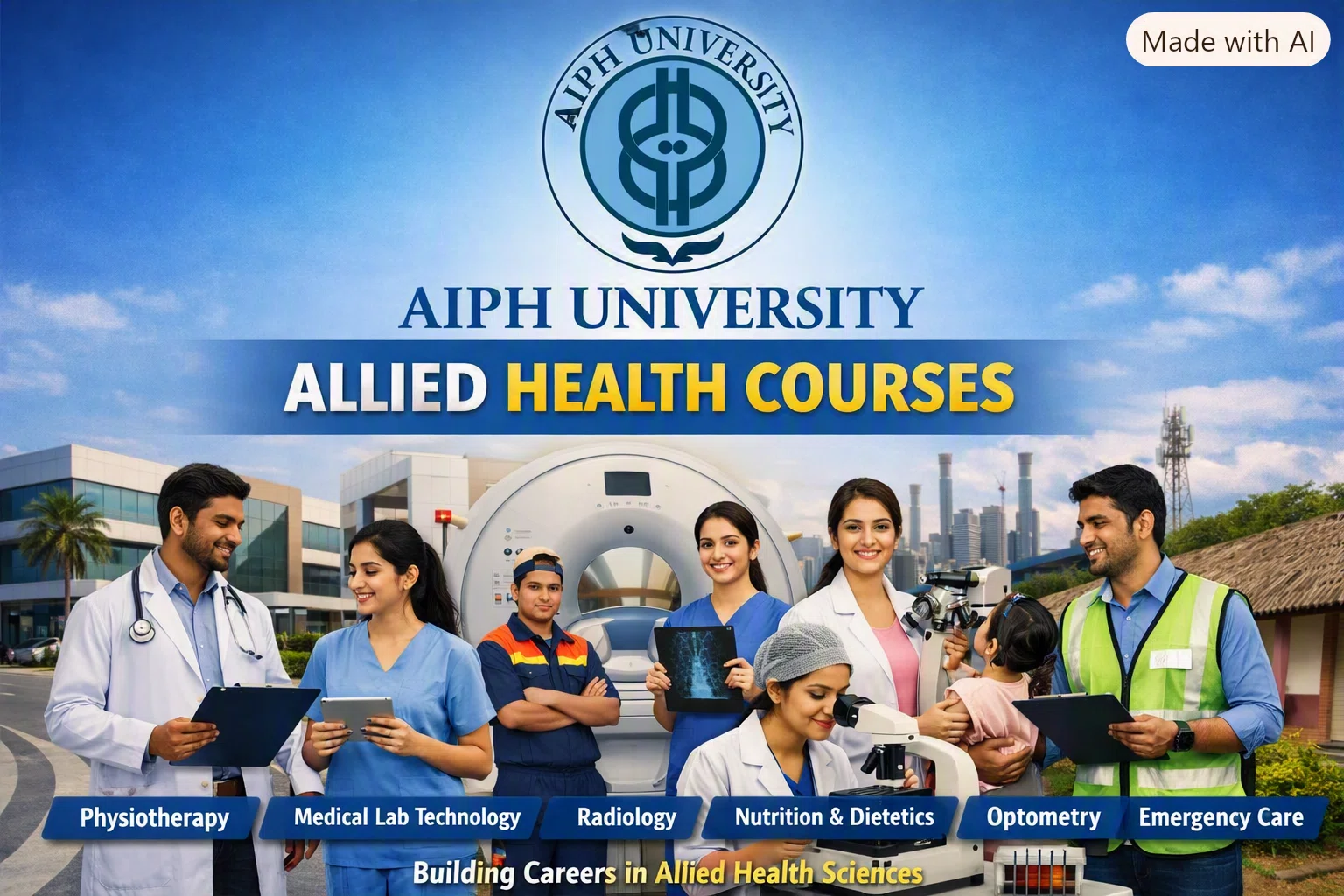
This touches some of the most popular career paths for science students who want to work in healthcare without pursuing an MBBS. According to available reporting, the following courses will require NEET UG appearance for admission from 2026-27:
Physiotherapy (BPT)
Nutrition & Dietetics
Optometry
Dialysis Technology
Medical Laboratory and Life Sciences
Medical Radiology, Imaging, and Therapeutic Technology
If you are aiming for any of these programmes, NEET UG will now be a non-negotiable part of your admission journey, alongside your Class 12 board exam performance. For example, for BPT specifically, colleges are also expected to continue requiring Class 12 with Physics, Chemistry, and Biology (PCB) and a minimum 50% aggregate, along with a minimum age of 17 at the time of admission — so NEET UG will sit on top of, not replace, these existing eligibility conditions.
When Does This Rule Come Into Effect?
The new NEET-mandatory admission process is set to apply from the 2026-27 academic year, as reported in NCAHP's announcement covered by Collegedunia and Shiksha. Since this is based on secondary reporting rather than a primary NCAHP document reviewed directly here, exact effective dates and any transitional provisions should be confirmed on NCAHP's official website and individual college admission pages as 2026-27 approaches, rather than relying on assumptions.
What Should Students Do Now?
If your goal is a career in physiotherapy, optometry, dialysis technology, or any of the other affected fields, here is how to realistically prepare for this shift:
Start NEET preparation early. Even if your main ambition is a paramedical course rather than MBBS or BDS, you will now need a genuine NEET UG preparation strategy covering Physics, Chemistry, and Biology.
Do not treat NEET as "just for medical seats." With this rule, your NEET score becomes directly relevant to allied health admissions too, so treat your preparation with the same seriousness as any NEET aspirant.
Track official curricula updates from NCAHP. Reported figures on notified curricula have already shifted from 13 to 17 across different sources, so check NCAHP's official site to confirm whether your specific course of interest is included and what exact eligibility conditions apply.
Talk to your school counsellor or mentors about how this change affects your overall academic planning, especially if you are currently deciding between science stream subject combinations.
Keep an eye on admission criteria details once colleges and universities update their prospectuses for 2026-27, since NEET appearance will likely be combined with existing academic requirements like Class 12 marks in relevant subjects, minimum aggregate percentage, and minimum age criteria.
Why This Matters Beyond Just One Exam
This move signals a broader push toward standardising quality and entry benchmarks across India's healthcare workforce — not just doctors and dentists, but the physiotherapists, optometrists, lab technicians, and radiology technicians who form the backbone of patient care. For students, this means allied health careers are being placed on a more structured, exam-based footing, similar to how medical and dental admissions already work.
For families and students who are currently exploring career options after Class 10 or Class 12, this is a good moment to have an honest conversation about long-term goals. If a paramedical career is on your radar, factoring in NEET preparation from an early stage, rather than scrambling closer to 2026-27, will put you in a much stronger position when the new rules take effect.
Stay tuned to official NCAHP notifications and your target institutions' admission pages for the exact procedural details as they are released.