
XXIII Commonwealth Games: A Blueprint for Sustainable Sport
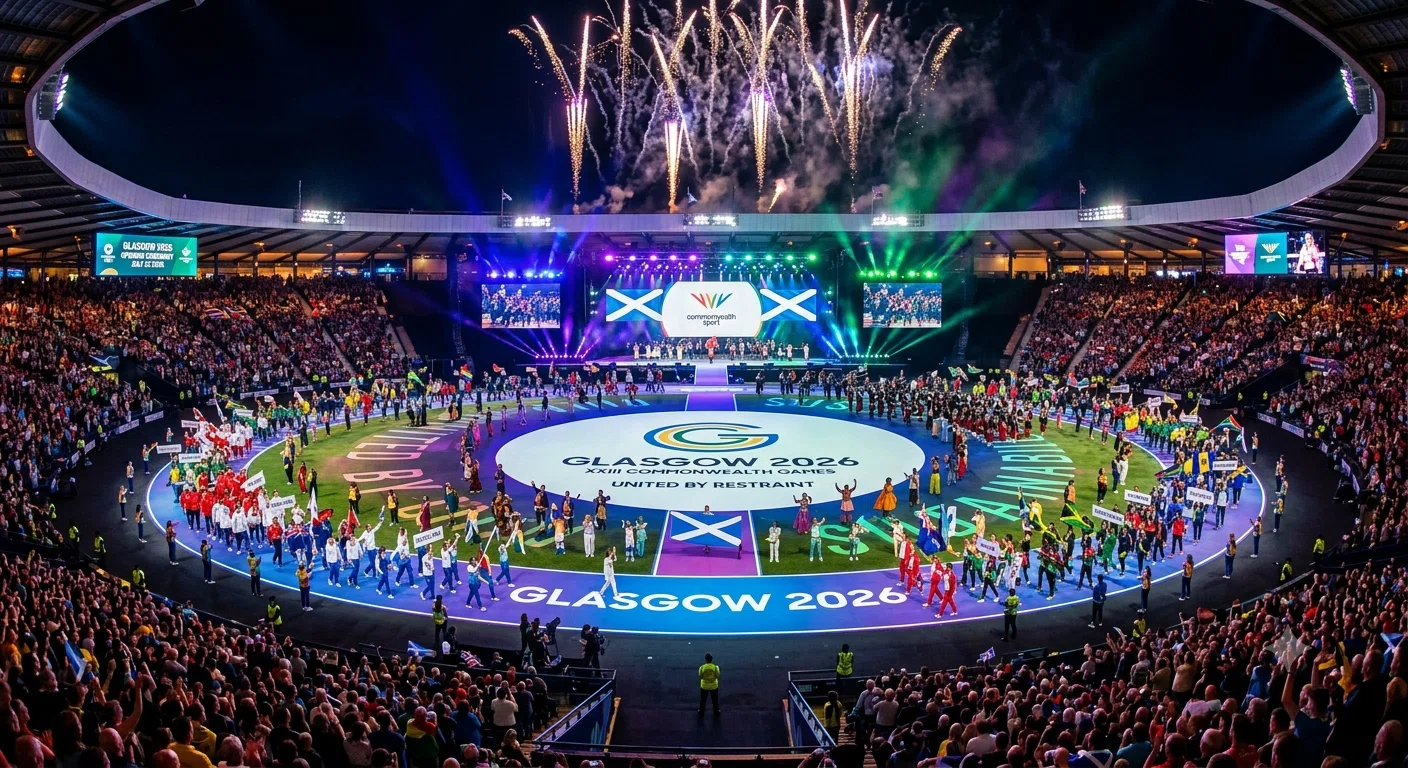
The XXIII Commonwealth Games, held in Glasgow, Scotland, from July 23 to August 2, 2026, marked a transformative chapter in multi-sport event history. Functioning as a high-stakes experiment in operational sustainability, financial restraint, and strategic streamlining, Glasgow 2026 redefined how major global tournaments can be hosted in an era of mounting economic pressures.
+-----------------------------------------------------------------+
|                      GLASGOW 2026 AT A GLANCE                   |
+--------------------------+--------------------------------------+
| Host City                | Glasgow, Scotland                    |
| Dates                    | July 23 – August 2, 2026             |
| Participating Nations    | 74 Commonwealth teams                |
| Core Venue Footprint     | 4 existing sites (8-mile corridor)   |
| Core Sports Model        | 10 able-bodied + 6 integrated Para   |
+--------------------------+--------------------------------------+
From Emergency Host to Blueprint
The path to the 2026 Games was fraught with uncertainty. The Australian state of Victoria was originally awarded the hosting rights in 2022 but abruptly withdrew in July 2023 due to escalating cost projections. Facing potential cancellation, Commonwealth Sport stepped in to pivot the hosting model.
Glasgow—having previously delivered a successful Commonwealth Games in 2014—stepped up as the replacement host. Rather than building costly, purpose-built venues, organizers introduced a scaled-down delivery framework centered on reusing existing infrastructure, utilizing university residences for accommodation, and capping public expenditure.
Compact Format and Venue Strategy
To maintain economic viability, the sports program was condensed to 10 core able-bodied sports:
Athletics & Para Athletics (Scotstoun Stadium)
Swimming & Para Swimming (Tollcross International Swimming Centre)
Track Cycling & Para Track Cycling (Sir Chris Hoy Velodrome)
3x3 Basketball & Wheelchair Basketball (SEC Centre)
Artistic Gymnastics (Glasgow International Arena)
Boxing (SEC Centre)
Netball (OVO Hydro)
Weightlifting & Para Powerlifting (SEC Armadillo)
Judo (SEC Centre)
Bowls & Para Bowls (SEC Centre, re-engineered indoors)
By housing events across just four primary venues within an eight-mile corridor, transport logistics and security overhauls were minimized. Crucially, the Games featured the largest integrated Para-sport medal program in Commonwealth history, setting a benchmark for total athletic inclusion.
Strategic Implications and Program Trimming
The condensed sports calendar meant high-profile omissions. Sports including wrestling, badminton, hockey, table tennis, and road cycling were omitted to adhere to strict space and budgetary limits.
This required participating nations to pivot their competitive strategies. Teams like Australia, England, and Canada leveraged depth across track, pool, and velodrome disciplines, while nations such as India adjusted to a program absent traditional medal strongholds.
Glasgow 2026 Final Top Medal Standings
------------------------------------------------------
Rank   Nation        Gold   Silver   Bronze   Total
------------------------------------------------------
1      Australia      67      41       54      162
2      England        26      43       35      104
3      Canada         18      20       21       59
4      India          13      17        9       39
5      Scotland       13       8       17       38
------------------------------------------------------
The Legacy of Glasgow 2026
Glasgow 2026 proved that international multi-sport events can deliver competitive intensity, athlete satisfaction, and global engagement without incurring multi-billion-dollar debts. By prioritizing sustainability, infrastructure re-use, and integrated para-athletics over lavish spending, the 23rd Commonwealth Games created a realistic template for future hosts.