
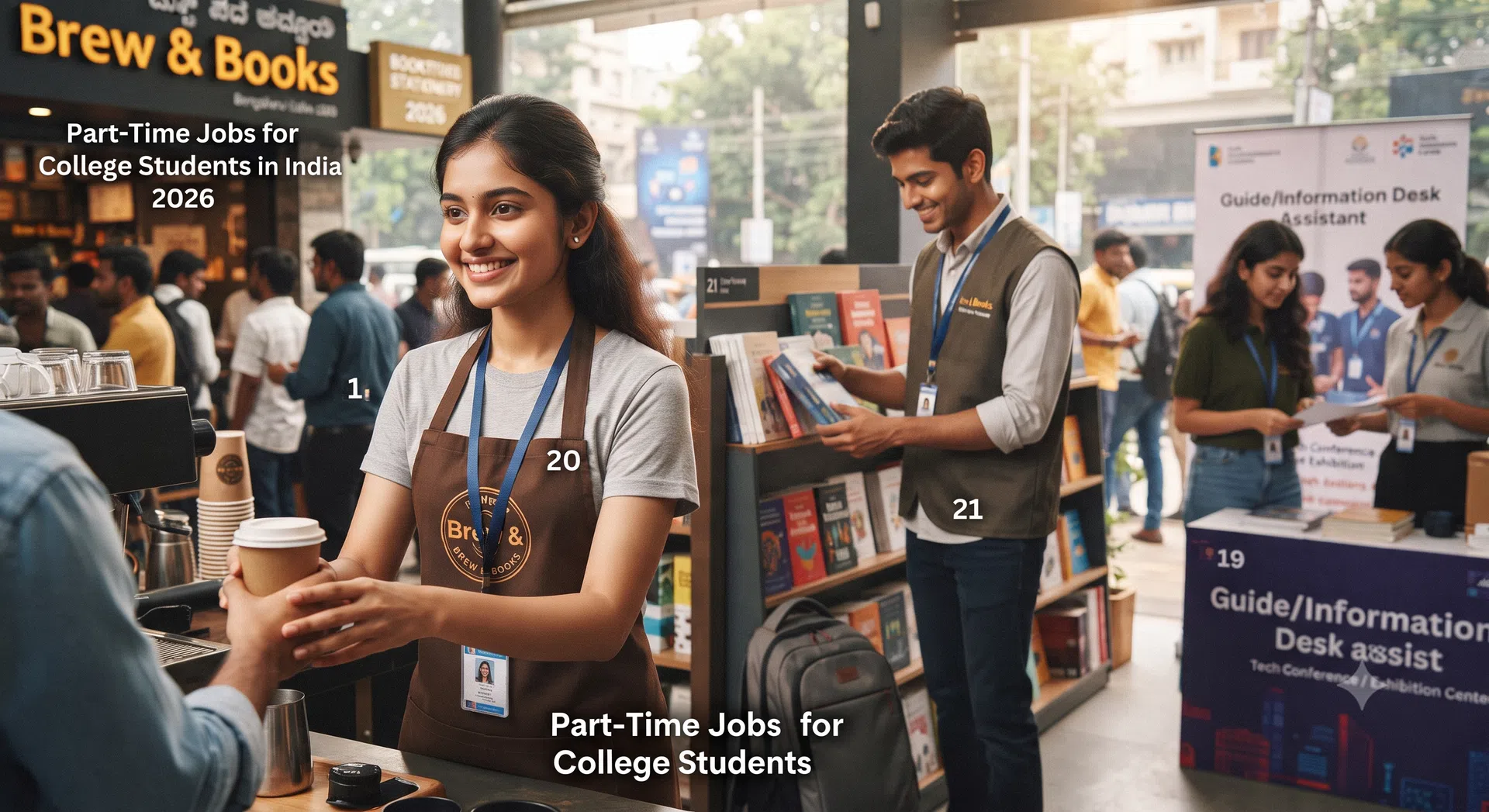
Can College Students in India Legally Work Part-Time?
Yes. There is no specific law in India that bars college students from taking up freelance or part-time work. As long as it doesn't interfere with your primary enrollment as a full-time student, working alongside your degree is legal.
Most colleges don't formally restrict part-time jobs, but the reality varies by course. If you're in MBBS or certain engineering programs with heavy lab hours and mandatory attendance, fitting in a job will be tougher than if you're doing a regular BA, BCom, or BBA. Know your course's attendance rules before you commit to a work schedule.
Part-time jobs for college students have become increasingly common across Indian campuses in recent years — not just for pocket money, but as a way to build real skills before graduation.
Why Bother Working While Studying?
It's easy to assume part-time work is only for students who need the money, but there's more to it than the paycheck. Here's what students actually gain:
Extra income to cover tuition top-ups, hostel expenses, or simply reduce dependence on family
Resume-building experience that stands out during campus placements
Real-world skills like communication, time management, and problem-solving that classrooms rarely teach
Networking opportunities with professionals and peers outside your immediate college circle
Early industry exposure, helping you figure out what you actually enjoy doing before you commit to a career path
Many recruiters specifically look favorably on candidates who've juggled work and studies — it signals responsibility and initiative. Worth noting, though: this is a general hiring impression, not a guarantee, and it matters more when the job itself required some accountability (fixed hours, real deliverables, dealing with people) rather than being purely informal or one-off.
It's also worth keeping the bigger hiring picture in mind. Entry-level hiring in India has been getting more competitive — the India Skills Report found fresher hires made up an average of just 14% of all new hiring in 2025, down from 18.8% the year before, and a 2025 EY analysis estimated entry-level IT roles in India have shrunk 20–25% due to automation in testing, basic coding, and maintenance work. In that environment, being able to point to actual work experience — even part-time — during placements is more useful than it used to be, not less.
Do You Need Experience or a Fancy Degree to Start?
No. You don't need a specialised degree or years of prior experience to find flexible work. Plenty of legitimate options need just three hours a day between lectures, or can be done entirely on weekends. The flexibility is the point — these jobs are built around student schedules, not the other way around.
What Kind of Part-Time Work Should You Actually Look For?
While specific job listings change constantly, the smart approach is to filter for roles that fit into gaps in your timetable without eating into study time or attendance. Before you say yes to anything, ask yourself:
Does this fit around my class schedule and exam periods?
Will this teach me a skill I can talk about in a placement interview?
Is the pay and payment schedule clearly explained upfront?
Can I verify this employer or platform is real?
If you can't confidently answer all four, slow down before committing.
Setting Realistic Pay Expectations
One of the most common mistakes students make is expecting part-time work to pay like a full-time job. It won't, and that's fine. The goal in your college years is a mix of steady pocket money and skill-building, not a full salary. Be wary of any part-time opportunity promising unusually high pay for minimal effort — that mismatch is often the first sign something isn't legitimate.
How to Avoid Scams Targeting Students
Students are frequently targeted by scams precisely because they're new to the job market and eager to earn. A few habits will protect you:
Never pay upfront for a job, registration fee, "training kit," or certificate before you've even started working. Legitimate part-time jobs pay you, they don't ask you to pay them first.
Verify the employer or platform independently. Search their name, check reviews, and see if they have a real, traceable presence beyond a single social media page or forwarded message.
Be suspicious of vague job descriptions. "Easy work, high pay, no interview" is a common scam script, not a real job offer.
Don't share sensitive personal or financial documents until you've confirmed the opportunity is genuine.
Ask seniors or your college placement cell if they've heard of the company or platform. Word of mouth from people who've actually been paid is one of the best filters available.
The Bottom Line
A part-time job in college isn't just about the money in your pocket, though that helps too. It's a low-risk way to build work habits, add something real to your resume, and walk into placement season with experience that shows responsibility — which matters more now that entry-level hiring itself has gotten tighter. Start small, fit it around your timetable, stay alert to scam warning signs, and treat it as practice for the career you're building toward.