

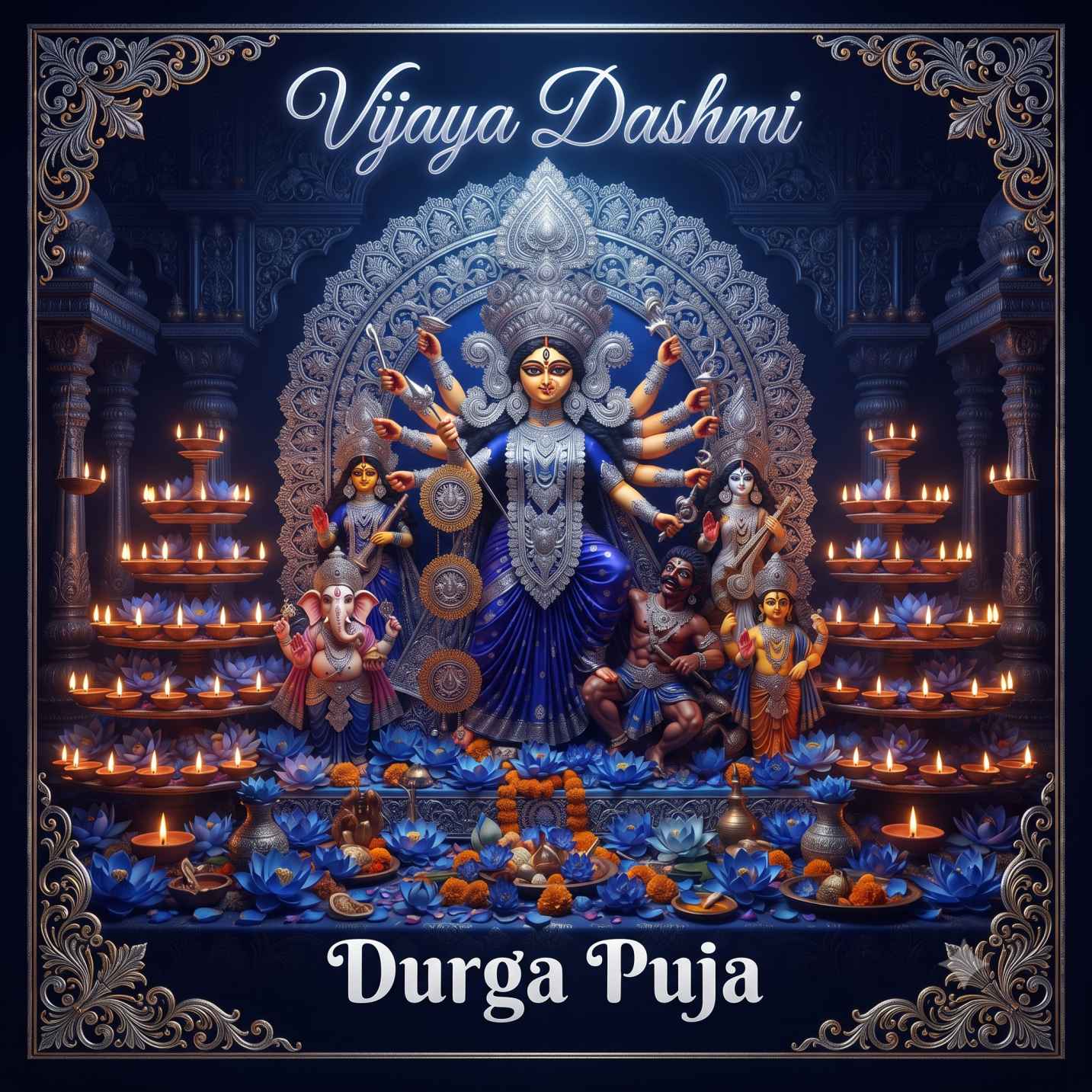
Introduction to Vijaya Dashami: Significance, Rituals, and Celebrations
Vijaya Dashami, popularly known as Dussehra, marks the glorious culmination of the ten-day Durga Puja festival. Celebrated on the tenth day of the bright lunar fortnight in the Hindu month of Ashwin, this auspicious festival signifies the ultimate victory of good over evil (Vijaya meaning victory and Dashami meaning the tenth day). Across India and among the global Hindu diaspora, Vijaya Dashami carries immense cultural weight, symbolizing not only the defeat of the demon Mahishasura by Goddess Durga but also Lord Rama's triumphant victory over the demon king Ravana. It is a day of vibrant celebrations, emotional farewells, and new beginnings.
Mythological Legends Behind Vijaya Dashami
The profound spiritual essence of Vijaya Dashami is anchored in two monumental epics of Hindu mythology, both emphasizing righteousness and divine intervention:
The Fall of Mahishasura: Following nine nights of fierce warfare, Goddess Durga vanquished the shape-shifting demon Mahishasura on Dashami, restoring cosmic balance and relieving the heavens of tyranny.
Lord Rama's Victory: In the northern and western parts of India, Dashami commemorates Lord Rama's defeat of Ravana, which he achieved after invoking Goddess Durga during the preceding Navratras (Sharad Navratri).
The Concept of 'Vijaya': Both narratives reinforce the core philosophical message that absolute truth, righteousness (dharma), and perseverance ultimately triumph over malevolence and ego.
Rituals of the Morning: Sindoor Khela and Blessings
The morning of Vijaya Dashami begins with deeply emotional and culturally rich rituals, particularly prominent in Eastern India:
Sindoor Khela: Married women gather inside community pandals to participate in Sindoor Khela. They apply vermilion (sindoor) to the feet and forehead of Goddess Durga before playfully smearing it on one another, praying for longevity, marital harmony, and the enduring bond of sisterhood.
Seeking Blessings (Pranam): Younger members of families touch the feet of elders to seek blessings, receiving sweet delicacies and good wishes for prosperity and success in new ventures.
Visarjan: The Emotional Idol Immersion Ceremony
By late afternoon, the festive atmosphere transitions from euphoria to a bittersweet sense of melancholy as preparations begin for Visarjan (the immersion ceremony):
Grand Processions: The sacred idols of Goddess Durga and her children are carried out in vibrant processions accompanied by the thunderous beats of dhaak drums, cymbal clashes, and joyful chanting.
The Final Farewell: Devotees bid a tearful goodbye to the Divine Mother, wishing her a safe journey back to her celestial abode in the Himalayas (Kailash) with the traditional promise: Asche bochor abar hobe (“Until next year, come back soon”).
Water Dissolution: The clay idols are respectfully immersed in rivers, lakes, or coastal waters, symbolizing the cycle of creation, preservation, and dissolution in nature.
Shami Puja and Ayudha Puja Across India
While eastern regions focus intensely on Durga Puja vis-a-vis the Goddess, other parts of India observe Vijaya Dashami through distinct regional traditions:
Shami Tree Worship: In Maharashtra and Karnataka, devotees exchange leaves of the Shami tree (historically associated with the Pandavas concealing their weapons) as a symbol of gold, peace, and mutual goodwill.
Ayudha Puja: In southern states, vehicles, machinery, tools, and books are cleaned and worshiped alongside weapons to honor the tools of livelihood and knowledge.
Ravan Dahan: In northern plains, towering effigies of Ravana, Kumbhakarna, and Meghnad are set ablaze at sunset, symbolizing the destruction of human vices.
Embracing New Beginnings
By shedding emotional burdens, letting go of internal vices, and embracing the victory of light over darkness, individuals step forward into the post-festival season with renewed optimism, moral clarity, and a peaceful heart.