

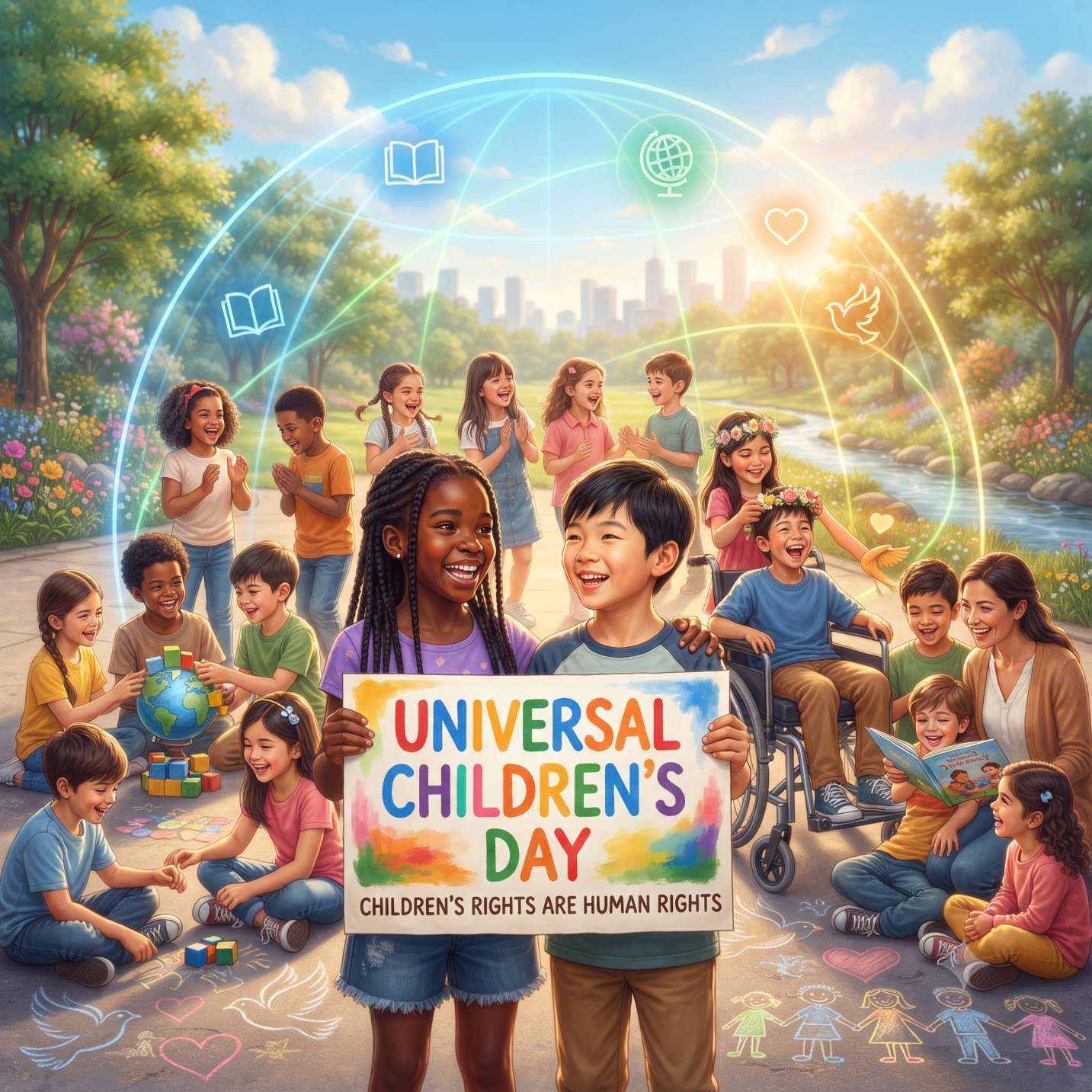
Universal Children's Day: Protecting Rights, Empowering Youth, and Securing Our Future
Observed globally on November 20, Universal Children's Day (often celebrated as World Children's Day) promotes international togetherness, awareness among children worldwide, and the improvement of children's welfare. First established in 1954, this vital observance marks the date in 1989 when the United Nations General Assembly adopted the Convention on the Rights of the Child (UNCRC)—the most widely ratified human rights treaty in history.
The Historical Background and Significance of November 20
Universal Children's Day was originally established to encourage all countries to institute a day dedicated to promoting child welfare and fraternity. The adoption of the UNCRC transformed how society views children: shifting them from passive objects of charity to active human beings with distinct, legally protected rights.
The convention establishes non-negotiable standards regarding:
The Right to Survival and Health: Access to nutritious food, clean water, and quality medical care.
The Right to Development: Access to inclusive education, play, and cultural activities.
The Right to Protection: Safeguarding children from violence, exploitation, child labor, and abuse.
The Right to Participation: Ensuring children's voices are heard and considered in decisions affecting their lives.
Addressing Modern Challenges Facing Children Today
While significant global strides have been made in reducing child mortality and expanding school enrollment, children in the modern era face complex, emerging threats:
Digital Safety and Cyberbullying: With children accessing the internet at younger ages, issues regarding online privacy, screen addiction, and cyberbullying require urgent legislative and parental safeguards.
Climate Change Impacts: Environmental degradation and extreme weather events disproportionately threaten children's health, education, and displacement status.
Educational Disparities: Inequities in digital infrastructure continue to leave marginalized and rural students behind, restricting equitable access to quality learning tools.
The Role of Communities, Schools, and Global Citizens
Observing Universal Children's Day requires more than symbolic awareness; it demands active participation from governments, educational institutions, and families.
Empowering Youth Voice: Creating platforms where children and adolescents can express their opinions on community building, mental health, and environmental sustainability.
Investing in Early Childhood Education: Ensuring that foundational education is accessible, engaging, and tailored to foster critical thinking and emotional resilience.
Championing Child Advocacy: Supporting grassroots and international organizations working tirelessly to rescue vulnerable children from poverty, labor, and neglect.
Conclusion
Universal Children's Day serves as a powerful reminder that the measure of any society is how it treats its youngest and most vulnerable members. By honoring children's rights, investing in their holistic education, and protecting them from modern adversities, we lay the foundation for a more peaceful, equitable, and prosperous global future.