

Remembering Lal Bahadur Shastri
Introduction to Lal Bahadur Shastri Jayanti
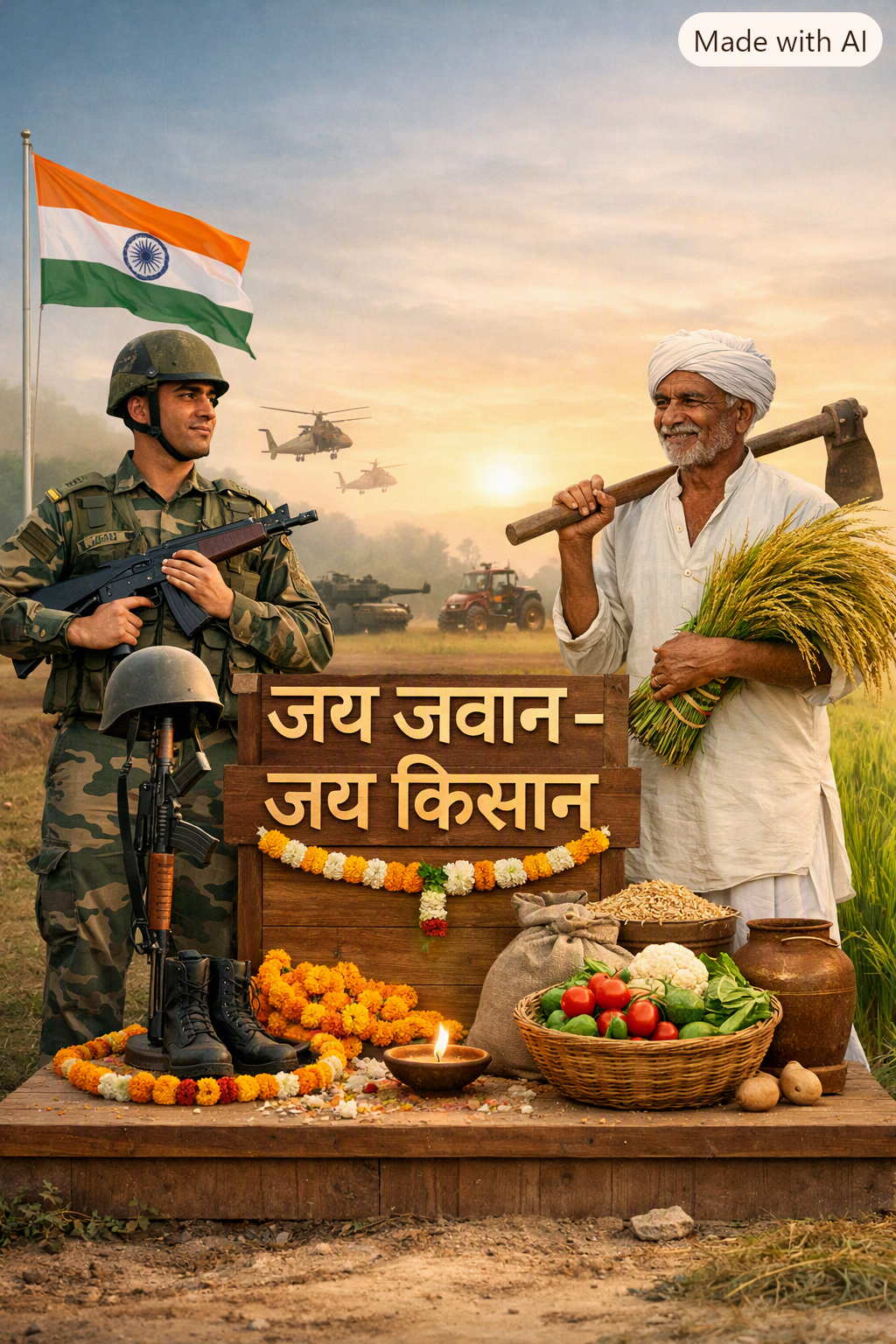
Every year on October 2nd, India commemorates the birth anniversary of Lal Bahadur Shastri, the second Prime Minister of independent India. Sharing his birthday with Mahatma Gandhi, Shastri embodied the same core values of profound humility, unyielding personal integrity, and unwavering patriotism. Though his tenure as Prime Minister was brief—spanning from June 1964 to January 1966—his leadership left an indelible mark on the nation's political, economic, and military history. He is best remembered for coining the immortal national slogan "Jai Jawan, Jai Kisan," which galvanized soldiers on the battlefield and farmers in the fields during a time of severe national crisis.
Early Life, Simplicity, and Rise to Leadership
Born in Mughalsarai, Uttar Pradesh, in 1904, Shastri’s early life was defined by financial hardship and resilience. Orphaned at a very young age, he cultivated a disciplined, self-reliant character. Inspired by the Indian independence movement, he dropped out of college in response to Mahatma Gandhi’s call for non-cooperation. He joined the Kashi Vidyapith, where he earned the degree of Shastri (meaning "scholar"), a title that permanently became part of his name.
Shastri’s political rise was characterized by dedicated grassroots service rather than privileged ambition. He held several critical portfolios in Jawaharlal Nehru’s cabinet, including Minister of Railways and Minister of Home Affairs. Demonstrating extraordinary accountability, Shastri once resigned from his position as Railway Minister following a tragic train accident, setting a rare moral benchmark for political ethics in Indian democracy.
Leadership During the 1965 Indo-Pakistan War
When Lal Bahadur Shastri assumed office in 1964, India was navigating immense turbulence: recovering from the economic and psychological strains of the 1962 war with China, facing widespread food shortages, and managing regional security threats.
In 1965, Pakistan launched a military aggression against India. Shastri displayed remarkable steel and decisive leadership under pressure. Instead of buckling, he authorized the Indian armed forces to open a new front, famously stating that force would be met with force. Under his strategic guidance, the Indian military successfully repelled the invasion, pushing towards Lahore and demonstrating formidable national defense capabilities. His leadership united a fractured country, instilling a deep sense of national pride and psychological resilience.
Coining "Jai Jawan, Jai Kisan"
During the 1965 conflict, India faced an unprecedented twin crisis: external military threats alongside an acute domestic food shortage exacerbated by a severe drought. Recognizing that national security depended equally on the soldier guarding the borders and the farmer feeding the population, Shastri coined the revolutionary slogan "Jai Jawan, Jai Kisan" (Hail the Soldier, Hail the Farmer).
This powerful mantra transformed the national consciousness. Shastri urged citizens to observe voluntary fasting one day a week to conserve food grains, and farmers across the country mobilized to maximize agricultural yield, laying the early groundwork for India's Green Revolution. The slogan became a permanent testament to the dignity of labor in safeguarding national sovereignty.
The Tashkent Declaration and Legacy
In January 1966, Shastri traveled to Tashkent (then part of the Soviet Union) to sign a peace agreement with Pakistani President Ayub Khan, brokered by Soviet premier Alexei Kosygin. Hours after signing the historic Tashkent Declaration, Shastri passed away under mysterious circumstances, plunging the nation into profound grief.
Though his life was cut short, his legacy endures as a gold standard for public service. He lived in a rented house, owned a modest car bought on a government loan, and left his family with no accumulated wealth.