

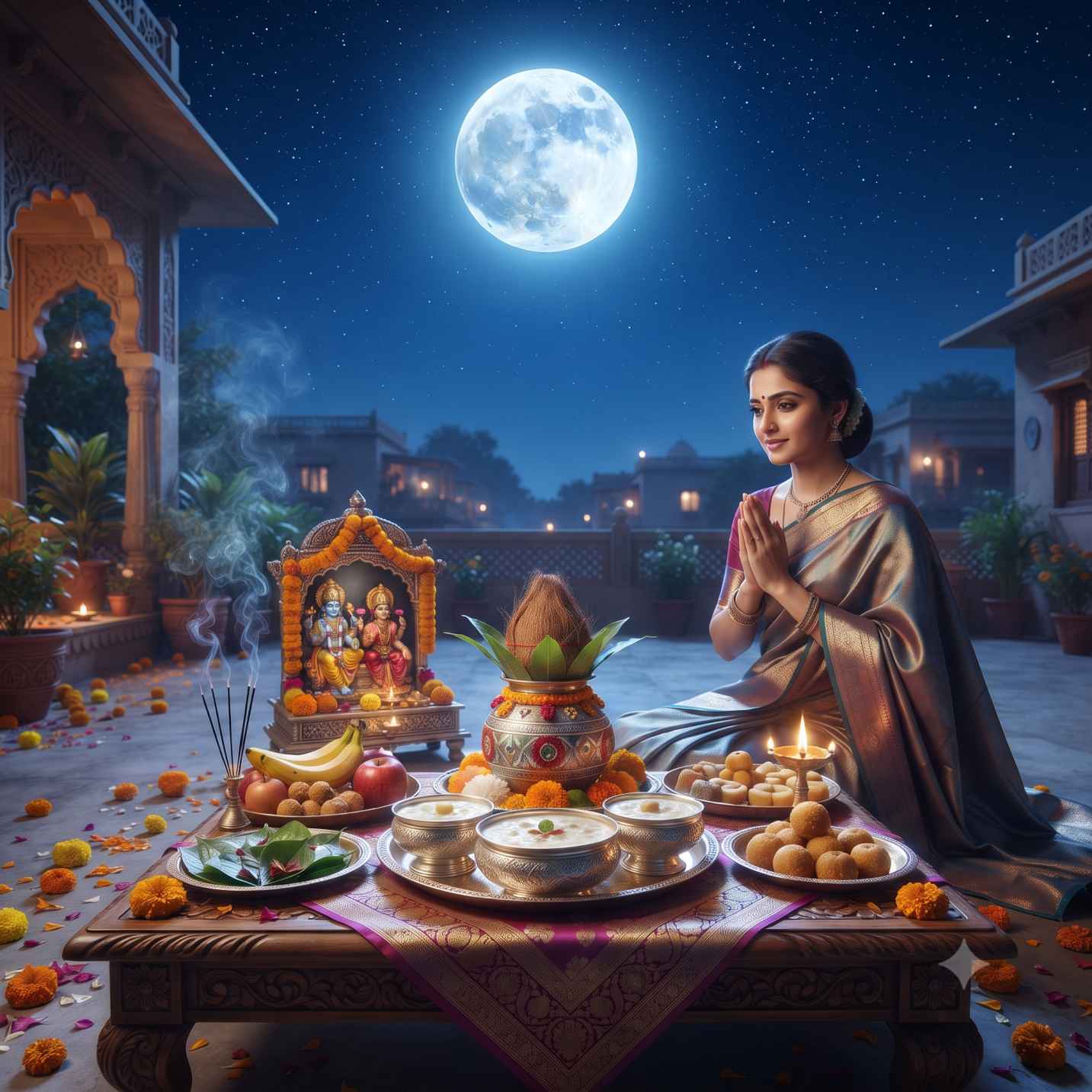
Significance, Traditions, and the Magic of Kojagiri Purnima
Introduction to Sharad Purnima
Sharad Purnima, also celebrated widely as Kojagiri Purnima or Ras Purnima, stands as one of the most enchanting and spiritually potent full moon nights in the Hindu calendar. Falling on the full moon day of the Hindu lunar month of Ashwin (September–October), this festival marks the pinnacle of the autumn season (Sharad Ritu). Unlike other full moon nights, Sharad Purnima holds a unique place in popular belief and sacred tradition, as it is believed that on this specific night, the moon shines with all sixteen divine kalas (phases), showering the earth with healing nectar (amrit) and celestial grace.
Astronomical and Spiritual Significance
The convergence of autumn and the full moon creates a rare atmospheric and spiritual balance. Agriculturally, Sharad Purnima signifies the completion of the harvest season, expressing deep gratitude to nature and celestial bodies for agricultural abundance.
From a spiritual perspective, the full moon represents the full manifestation of the mind and divine consciousness. Ancient Yogic and Ayurvedic traditions view this night as exceptionally powerful for meditation, emotional balancing, and physical rejuvenation. The clear autumn skies, devoid of monsoon clouds, allow the moonlight to bathe the earth unobstructed, creating an atmosphere charged with peace and divine energy.
The Tradition of Kheer and Moonlight Immersion
One of the most defining and cherished rituals of Sharad Purnima involves the preparation and overnight moonlight immersion of Kheer (a traditional sweet rice pudding):
Preparing the Offering: Households prepare a rich, nourishing kheer made of rice, milk, sugar, and cardamom, often infused with dried fruits and saffron.
Moonlight Exposure: Once prepared, the vessels containing the kheer are covered with a fine muslin cloth and placed directly under the open night sky, bathed in the direct rays of the full moon for several hours.
The Healing Nectar: According to traditional belief, the moon's potent rays interact with the milk preparation, infusing it with medicinal and cooling properties (amrit). The next morning, this blessed kheer is distributed among family members as prasad for health, vitality, and longevity.
Kojagiri Vrat and Midnight Observances
In many regions of India, particularly in Maharashtra, Gujarat, and parts of Odisha and West Bengal, the festival is observed as Kojagiri Purnima or Kojaagari Vrat:
The Legend of Kojagara: The word Kojagari is derived from the Sanskrit phrase "Ko jagarti?", meaning "Who is awake?". According to folklore, Goddess Lakshmi descends to Earth at midnight on this night, wandering from house to house to bless those who are awake and engaged in prayer.
Nightlong Vigils: Families stay awake late into the night, playing traditional indoor games, singing devotional songs (bhajans), and organizing cultural gatherings. Newlyweds are often showered with special gifts, clothes, and jewelry by their families in celebration of prosperity.
Worship of Lakshmi and Indra: Devotees worship Goddess Lakshmi alongside Lord Indra and his celestial elephant Airavata, praying for financial stability, wealth, and spiritual grace.
The Connection to Lord Krishna and Rasleela
Sharad Purnima also holds profound significance for Vaishnavite traditions, celebrating the divine romance and spiritual symbolism of Lord Krishna and the Gopis in Vrindavan:
The Celestial Dance (Rasleela): It is believed that on this enchanting autumn night, Lord Krishna played his divine flute, inviting the Gopis to the banks of the Yamuna River.
Divine Union: The enchanting music cast a spell, pausing time itself, allowing the Gopis to dance in divine ecstasy (Rasleela). This legendary dance symbolizes the ultimate merging of the individual human soul (jivatman) with the supreme cosmic consciousness (paramatman).
Embracing the Radiance of Sharad Purnima
Sharad Purnima is far more than a cultural celebration of autumn; it is an invitation to pause, look up at the luminous night sky, and reconnect with inner tranquility. Whether through partaking in the moon-kissed kheer, staying awake to welcome Goddess Lakshmi, or meditating under the silver moonlight, Sharad Purnima cleanses the mind and invigorates the body, leaving a lingering sense of peace and divine joy as winter approaches.