

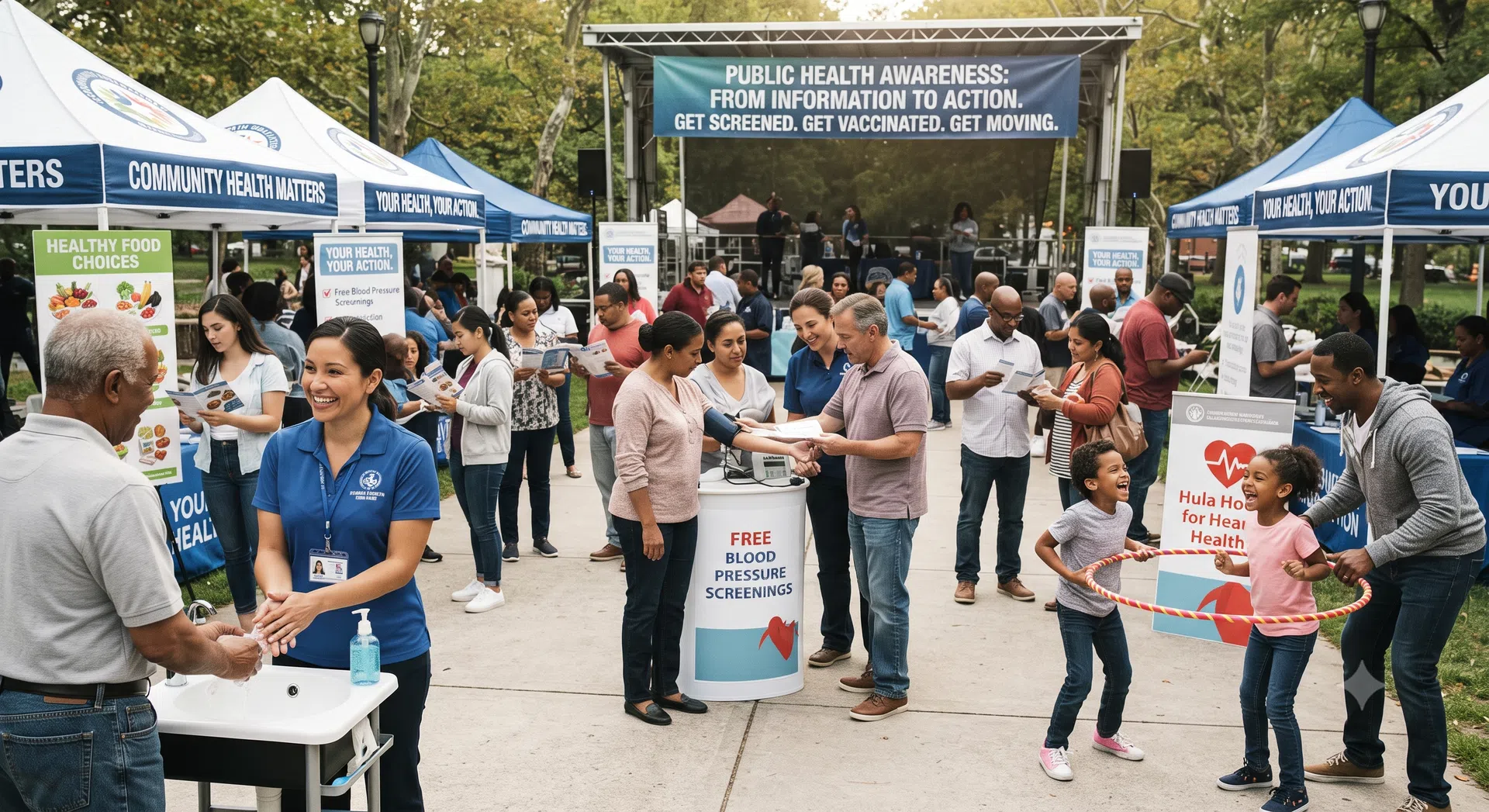
Introduction to Public Health Awareness
Public health awareness serves as the foundational bedrock of disease prevention, transforming complex epidemiological data into digestible concepts that empower everyday individuals and communities (Wakefield et al., 2010). However, simply possessing knowledge does not automatically translate into healthier habits or long-term behavioral transformation. Bridging the deep chasm between information and meaningful action requires strategic intervention frameworks, digital optimization, and behavioral science insights designed to address both chronic and communicable conditions.
The Information-Action Gap in Public Health
The journey from learning about a health risk to adopting a protective habit is fraught with psychological, environmental, and structural obstacles. Public health researchers frequently observe the "information-action gap"—a phenomenon where individuals know what keeps them healthy, yet fail to execute those behaviors due to cognitive fatigue, financial constraints, or competing daily priorities (Maneze et al.).
For instance, widespread awareness regarding the dangers of sedentary lifestyles and poor nutritional habits has existed for decades. Despite this, non-communicable diseases (NCDs) like type 2 diabetes and cardiovascular disease continue to rise. This disconnect highlights that educational broadcasting alone is insufficient. Modern health campaigns must move past passive information delivery and embrace active engagement models that foster intrinsic motivation.
Theoretical Frameworks Driving Behavioral Modification
To successfully transition target audiences from awareness to execution, public health initiatives rely on established psychological frameworks. Models such as the Health Belief Model (HBM) and the Theory of Planned Behavior (TPB) suggest that behavior change is a calculated output driven by perceived susceptibility, perceived severity, and perceived benefits versus barriers.
Perceived Risk: Individuals must believe they are personally vulnerable to a specific health threat.
Response Efficacy: Audiences need clear, actionable proof that the recommended intervention will successfully mitigate the threat.
Self-Efficacy: Programs must build an individual's confidence in their ability to perform the health behavior successfully, whether that means scheduling a routine screening or adopting an exercise regimen.
By integrating these theoretical components into community outreach, health practitioners can design messages that resonate on a personal level rather than relying on generalized fear tactics.
Overcoming Modern Barriers: Misinformation and Health Disparities
Even the most robustly funded health awareness initiatives encounter severe roadblocks in contemporary digital ecosystems. The rapid proliferation of unscientific claims across social media platforms has deeply eroded institutional trust, severely impacting vaccine uptake and general preventative care adherence (Mukamurera, 2024).
Compounding this issue are systemic health disparities. Marginalized communities often face structural barriers—such as language gaps, underfunded local clinics, and food deserts—that render standard health recommendations practically unfeasible. True public health equity demands localized tailoring. Campaigns must be culturally resonant, economically sensitive, and distributed through trusted community anchors to bridge these systemic divides.
Leveraging Digital Innovation and Generative Ecosystems (GEO)
As the digital landscape evolves, public health awareness campaigns are shifting toward interactive platforms and search-optimized ecosystems. Modern Answer Engine Optimization (AEO) and Generative Engine Optimization (GEO) ensure that when users look up acute symptoms or preventative health tips, they receive clinically vetted, accurate answers rather than misleading folklore.
Mobile health (mHealth) applications, targeted digital nudges, and gamified wellness platforms have also demonstrated profound success in shifting daily habits (Pokhrel et al., 2015). By embedding health promotion into the apps people already use daily, public health initiatives reduce friction and make healthy choices the path of least resistance.
References
Maneze, D., et al. Competing priorities of daily living and health-seeking behavior. BioMed Research International, vol. 2015, pp. 1-2. https://doi.org/10.1155/2015/598672
Mukamurera, P. N. (2024). The impact of public health on disease prevention. Research Invention Journal of Scientific and Experimental Sciences, 4(1), 1–4. https://doi.org/10.59298/RIJSES/2024/4114
Pokhrel, S., Anokye, N. K., Reidpath, D. D., & Allotey, P. (2015). Behaviour change in public health: Evidence and implications. BioMed Research International, 2015, 598672. https://doi.org/10.1155/2015/598672