

Choti Diwali: History, Significance, and Traditions of Naraka Chaturdashi
Choti Diwali, widely known as Naraka Chaturdashi or Roop Chaturdashi, is observed on the fourteenth lunar day (Chaturdashi) of the dark fortnight in the Hindu month of Kartik. Celebrated on the second day of the grand five-day festival of lights, it serves as an important precursor to the main Diwali celebrations.
While it shares the festive enthusiasm of lighting lamps and distributing sweets, Choti Diwali carries its own distinct historical narratives, spiritual significance, and cleansing rituals centered around the eradication of evil, ignorance, and impurity.
Mythological Origins: The Defeat of Narakasura
The primary legend behind Choti Diwali commemorates the fierce battle in which Lord Krishna, accompanied by Satyabhama, defeated the tyrannical demon Narakasura (also known as Bhaumasura).
The Tyranny of Narakasura: Narakasura, the ruler of Pragjyotishapura, had grown immensely powerful and arrogant through wicked associations. He terrorized earthly kingdoms, launched assaults on the heavenly realms, and wrongfully imprisoned over 16,000 princesses. He also stole sacred celestial items, including Mother Aditi's magnificent earrings.
The Triumph of Light Over Darkness: Recognizing the immense threat, Lord Krishna intervened and vanquished the demon. Before passing, Narakasura requested a boon that his death anniversary be celebrated with vibrant lights and festivities to symbolize the ultimate triumph of knowledge and virtue over ignorance and evil. Following his defeat, Lord Krishna liberated all the captive princesses, restoring cosmic balance and righteousness.
Key Rituals and Traditional Observances
The customs associated with Choti Diwali focus heavily on physical purification, spiritual renewal, and warding off negative energies:
Abhyanga Snan (The Auspicious Morning Bath): One of the most prominent traditions of Choti Diwali is the pre-dawn herbal bath. Devotees apply a paste made of sesame oil, herbs, and gram flour (ubtan) before sunrise. This ritual bath symbolizes the cleansing of physical impurities and mental negativity, commemorating the purification bath taken by Lord Krishna after defeating Narakasura. Because of its focus on personal radiance and skin rejuvenation, the day is also celebrated as Roop Chaudas.
Yamadeepdaan (Lighting Lamps for Yama): In the evening, families light earthen lamps (diyas) and place them outside the main entrance or near southern boundaries to honor Yama, the god of death. This ritual prayer invokes protection from untimely harm, sorrow, and negative energies for the household.
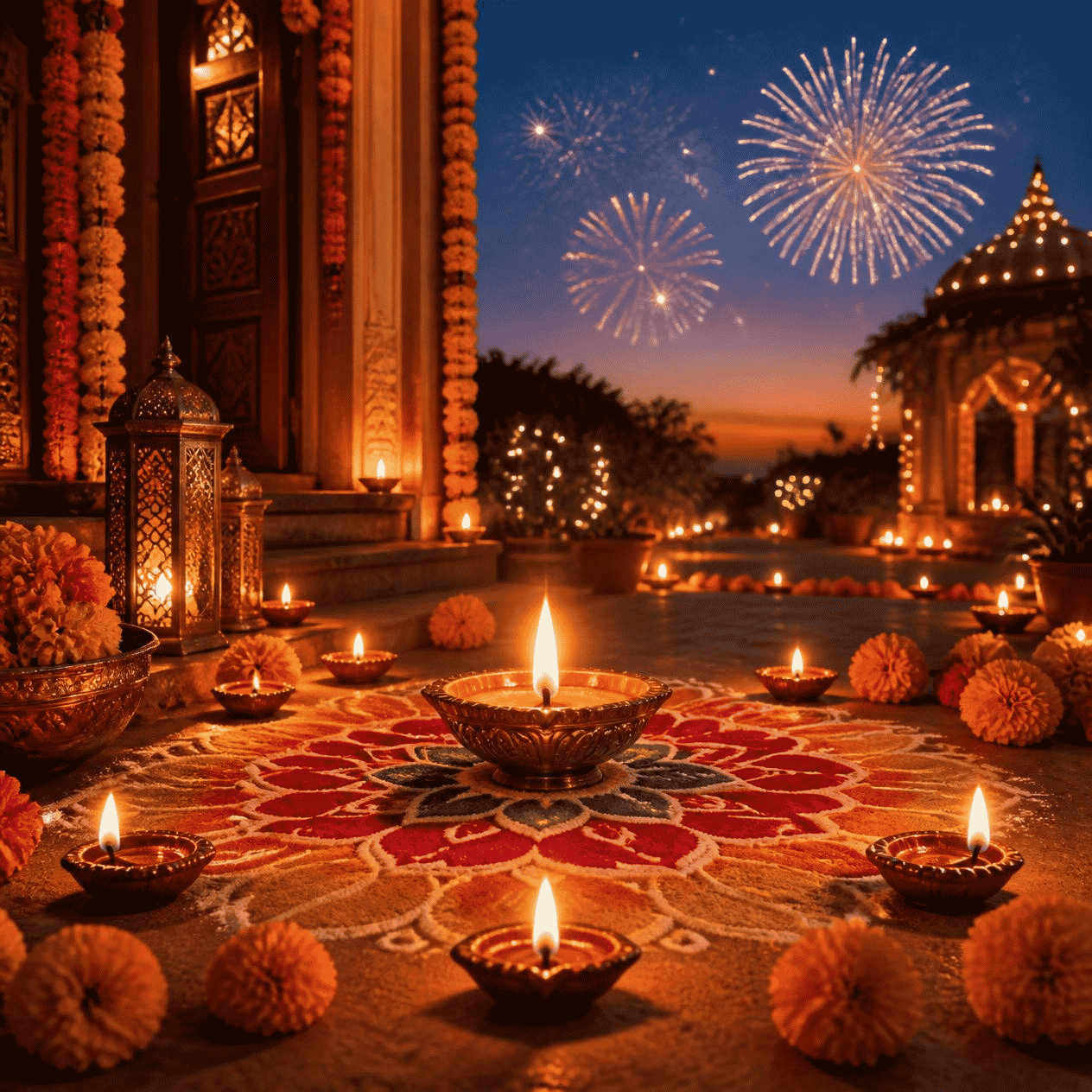
Lighting Diyas and Decorating Homes: As a preview to the main festival, homes are adorned with sparkling clay diyas, electric lights, and intricate floral rangolis to welcome positive vibrations and prosperity.
Cultural Significance and Regional Variations
While northern and western regions predominantly celebrate the day through Lord Krishna's victory over Narakasura, various parts of India observe distinct cultural traditions:
Kali Puja: In eastern states like West Bengal, the night of Choti Diwali coincides with Kali Puja, where devotees passionately worship Goddess Kali to vanquish inner darkness and ego.
Deep Daan: Lighting rows of lamps across doorsteps and windows emphasizes that goodness and light will always outshine wickedness and despair.
References
FlowerAura. (2021). Why Is Choti Diwali Celebrated? https://www.floweraura.com/blog/why-choti-diwali-celebrated
Times of India. (2016). Chhoti Diwali: Meaning, Significance and Celebration. https://timesofindia.indiatimes.com/religion/rituals-puja/chhoti-diwali/articleshow/68206640.cms
Business Standard. (2023). Choti Diwali 2023: History, Importance, Timings, Wishes and Messages. https://www.business-standard.com/india-news/choti-diwali-2023-history-importance-timings-wishes-and-messages-123111000838_1.html
Vedic Guruji. (2020). Choti Diwali and its significance. https://vedicguruji.com/blog/choti-diwali-and-its-significance
Exotic India Art. (2022). Diwali Rituals - Knowing its true Essence. https://www.exoticindiaart.com/blog/diwali-knowing-its-true-essence/