

Chhath Puja: A Sacred Celebration of Nature, Sun Worship, and Gratitude
Chhath Puja (also known as Surya Shasthi Vrat) stands as one of the most ancient, rigorous, and ecologically profound festivals in the Indian subcontinent. Primarily celebrated in regions like Bihar, Jharkhand, and eastern Uttar Pradesh, this four-day spiritual journey is dedicated entirely to Surya (the Sun God)—the ultimate life-giver and sustainer of energy on Earth—alongside Chhathi Maiya, the protector goddess of children.
Unlike many mainstream Hindu festivals that involve elaborate temple idol worship, Chhath Puja centers on direct communion with natural elements, specifically rivers, water bodies, and the sun.
Mythological Roots and Historical Significance
The history of Chhath Puja traces its origins back to ancient Vedic traditions, with hymns dedicated to the Sun God embedded within scriptures like the Rigveda. The festival is also deeply woven into epics like the Ramayana and Mahabharata:
The Ramayana Connection: According to tradition, when Lord Rama and Goddess Sita returned to Ayodhya after completing their fourteen-year exile, they observed a fast and offered prayers to the Sun God at sunset and sunrise to express gratitude for strength and guidance.
The Mahabharata Connection: The legendary warrior Karna, known for his generosity and strength as the son of Surya and Kunti, regularly performed worship by standing waist-deep in water to honor his divine father. Similarly, the Pandavas and Draupadi performed solar rituals to overcome hardships and regain their lost kingdom.
The Rigorous Four-Day Ritual Journey
Spanning over four consecutive days, Chhath Puja requires immense physical discipline, mental resilience, and absolute purity.
1. Day One: Nahay Khay (The Day of Purification)
The festival commences with devotees taking a holy dip in sacred rivers or water bodies. Homes and surroundings undergo rigorous cleaning. The primary devotee (parvaitin) consumes a single satvik meal—typically cooked in traditional earthen pots using raw rice, bottle gourd, and lentils without garlic or onions—to purify the mind and body.
2. Day Two: Kharna or Lohanda (Day of Fasting)
On the second day, devotees observe a day-long fast without consuming a single drop of water. In the evening, after offering prayers to Mother Earth and setting up sacred spaces, they break their fast by consuming jaggery-infused rice pudding (rasiaav) and roti. This initiates a strict, uninterrupted 36-hour nirjala vrat (fasting without food or water).
3. Day Three: Sandhya Arghya (Offerings to the Setting Sun)
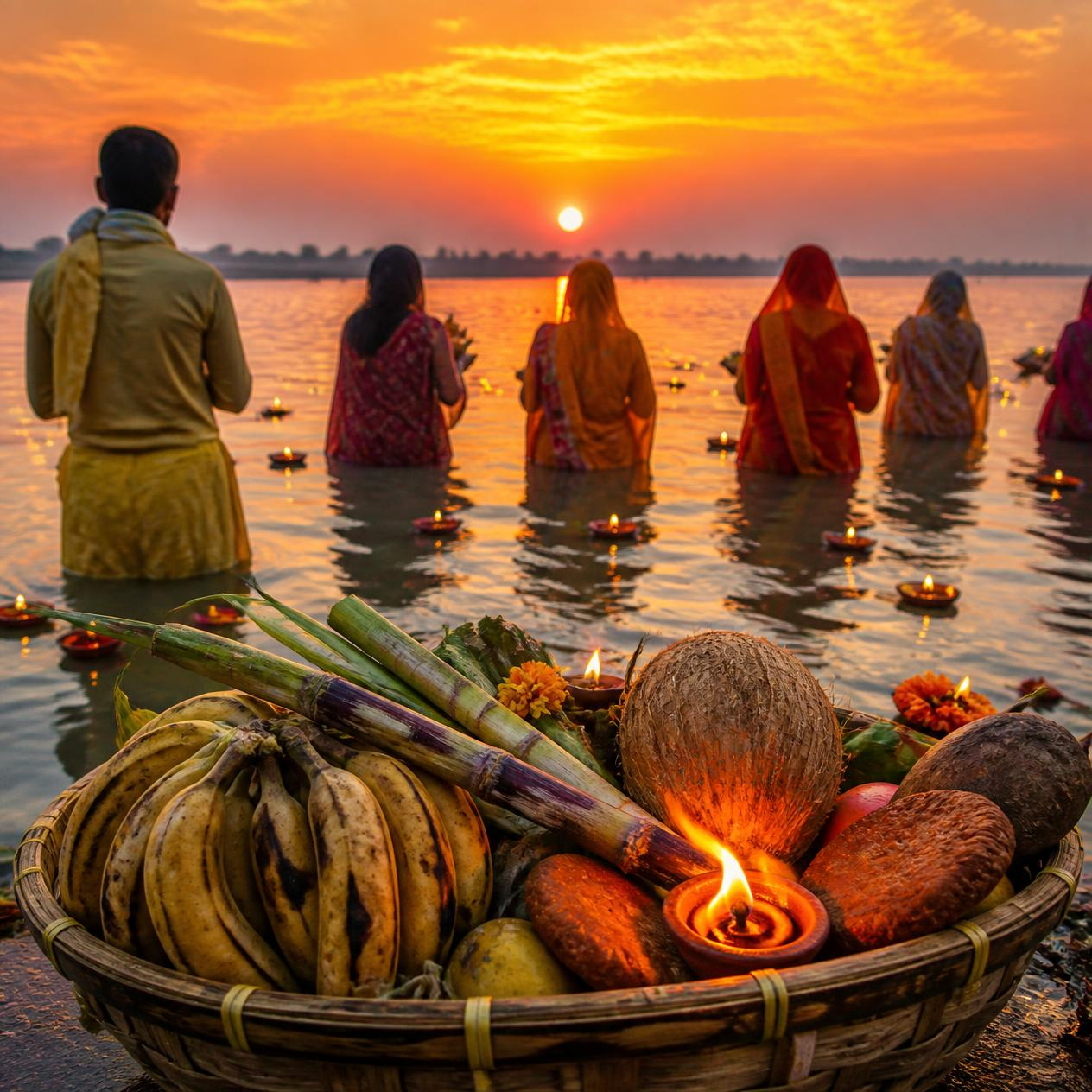
The third day marks the peak of the festival. Families gather at riverbanks, ponds, or specially constructed water reservoirs carrying baskets filled with seasonal fruits, sugarcane stalks, and traditional sweets like thekua. Worshippers stand waist-deep in water during sunset to offer Arghya (water and milk offerings) to the setting sun. Notably, Chhath is unique because it is the only major festival where both the setting and the rising sun are worshipped.
4. Day Four: Usha Arghya (Offerings to the Rising Sun and Parana)
The final morning begins before dawn as families gather at the water's edge once again. Worshippers offer Arghya to the rising sun, thank Chhathi Maiya for family protection and prosperity, and finally complete their strenuous fast (Parana) by consuming a small sip of water and sacred prasad.
Cultural Values and Environmental Harmony
Beyond its deep spiritual dimensions, Chhath Puja serves as a powerful reminder of environmental stewardship and social equality. The festival promotes absolute cleanliness of natural water resources, encourages community bonding, and emphasizes humility by bridging socio-economic divides as people from all walks of life gather side by side on riverbanks.
References
Incredible India. Chhath Puja: Significance, Rituals and Heritage. Ministry of Tourism, Government of India. https://www.incredibleindia.gov.in/en/festivals-and-events/chhath-puja
Wikipedia contributors. Chhath. In Wikipedia, The Free Encyclopedia. https://en.wikipedia.org/wiki/Chhath
SHREE. Significance, Rituals, Myths And Tradition Of Chhath Puja. https://byshree.com/blogs/news/significance-rituals-myths-and-tradition-of-chhath-puja
Pradyumna Kumar. Chhath Puja: Origin of the Festival, and the Story of Devasena. Sahapedia. http://www.sahapedia.org/chhath-puja-origin-of-the-festival-and-the-story-of-devasena
Diwas Fashion. Tracing the Chhath Puja Story Through Indian History. https://www.diwasfashion.com/en-in/blogs/chhath-puja-story-indian-history.html
Trimbakeshwar Temple Pujari. Chhath Puja 2026 – Significance, Rituals, And Complete Guide. https://trimbakeshwartemplepujari.com/chhath-puja/