

The Changing Landscape of Higher Education in Odisha
Higher education in India is undergoing a massive transformation, and the state of Odisha is rapidly emerging as a focal point for academic innovation, structural reforms, and inclusive growth. For decades, tertiary education in the region faced hurdles ranging from infrastructural bottlenecks to a mismatch between academic curricula and industry requirements. Today, however, proactive legislative actions, technological integration, and progressive social frameworks are reshaping the state's academic corridors. This dynamic evolution is redefining how universities operate, how students acquire technical competence, and how educational equity is being achieved across urban and rural domains.
Legislative Overhauls and Institutional Governance
A cornerstone of Odisha's changing educational ecosystem is the overhaul of university governance. The implementation of landmark legal frameworks, such as the Odisha University (Amendment) Act, has injected fresh momentum into state-run institutions. By granting greater operational flexibility, redefining the selection processes for academic leadership, and reintroducing administrative bodies like the Senate, the state aims to eliminate bureaucratic delays and empower universities to make independent, agile decisions.
These regulatory modifications are designed to foster an environment where institutional autonomy thrives alongside accountability. Universities are no longer bound rigidly by centralized recruitment bottlenecks; instead, they are equipped to curate specialized faculty boards that match modern undergraduate and postgraduate teaching requirements. Consequently, institutional performance standards are shifting toward measurable outcomes mandated by national accreditation frameworks.
Bridging the Digital and Skills Divide
In an era defined by artificial intelligence and digital disruption, modernizing curriculum delivery is no longer optional. Recognizing this imperative, Odisha’s Department of Higher Education has aggressively pursued strategic partnerships with corporate leaders and technological foundations. Recent collaborations with entities like IBM, CSRBOX, the Naandi Foundation, and NASSCOM have introduced large-scale digital initiatives, including the statewide "AI Course for All" program.
These partnerships are meticulously structured to reach students in remote and aspirational districts, ensuring that geographic isolation does not restrict technical empowerment. By integrating project-based learning in fields such as artificial intelligence, enterprise design thinking, and data literacy, educational institutions are actively boosting student employability. Furthermore, the deployment of transparent digital utilities—such as academic performance auditing portals and integrated question banks—enhances structural transparency and drives uniform educational quality.
Expanding Infrastructure and Social Inclusion
True progress in higher education cannot occur without addressing deep-rooted socio-economic disparities. Recent policy shifts in Odisha have brought inclusive access to the forefront, notably through major reservation reforms across technical, professional, and state university programs. By recalibrating quotas for Scheduled Tribes, Scheduled Castes, and Socially and Educationally Backward Classes, the state is actively clearing historical roadblocks to professional medical, engineering, and management seats.
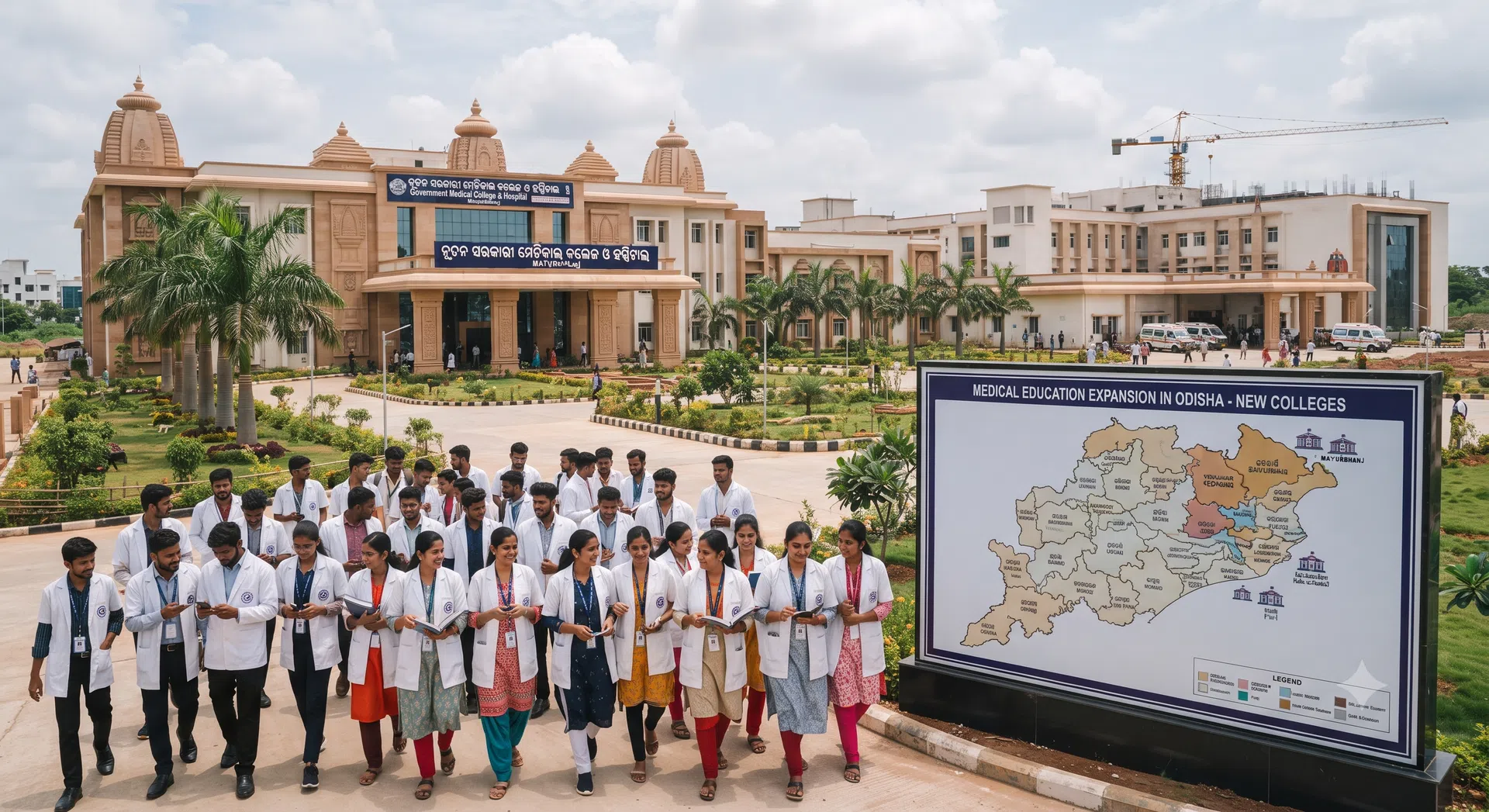
Simultaneously, physical and geographical expansion continues to pick up pace. The establishment of new state-funded universities in regional districts such as Kendrapara, Jagatsinghpur, Bhadrak, and Jharsuguda decentralizes higher learning, bringing universities closer to students' doorsteps. This decentralized growth model minimizes migration pressures on major metropolitan hubs and ensures that regional aspirations are met locally.
The Path Forward for Odisha's Universities
Bridging the gap between theoretical knowledge and practical application, prioritizing targeted digital training for female students, and maintaining rigorous academic standards will determine the long-term viability of these reforms. By harmonizing progressive governance with inclusive policies, Odisha is steadily building a resilient, knowledge-driven economy fit for the future.
References
Odisha Ray. (2025). Odisha University (Amendment) Act, 2024 comes into force. https://odisharay.com/pages/single_page.php?id=47993
The News Insight. (2026). Odisha Cabinet Approves Major Reservation Reform in Higher Education. https://enewsinsight.com/odisha-cabinet-approves-major-reservation-reform-in-higher-education/
Press Trust of India (PTI). (2026). Odisha signs MoUs with 3 organisations for skill development, digital learning of students. https://www.ptinews.com/story/national/odisha-signs-mous-with-3-orgnisations-for-skill-development-digital-learning-of-students/4038554
Odisha Budget 2026: 4 New Universities Announced in 4 Districts